Reviewing the 100 Days of School Design for Real Projects
As a designer who spends half my life staring at digitized files and the other half watching needles punch through fabric, I have learned to be skeptical of generic T-Shirt Designs. We see thousands of them. Most are cluttered, poorly spaced, or simply not built for the physical reality of thread. However, when I pulled up the 100 Days of School T-shirt Design PNG to evaluate it for a potential client project, my initial reaction was one of cautious optimism. This is not just another clipart dump; it is a functional asset that requires a specific approach to yield professional results.
The core appeal here lies in its versatility. The product details list an EPS, PDF, SVG, and a high-resolution PNG at 4500×5400 pixels with 300 DPI. For those of us working in both digital printing and machine embroidery, this multi-format availability is crucial. But let’s be clear: if you are planning to stitch this, you are likely using the vector files (EPS or SVG) to create your own digitized version, or using the PNG as a reference for applique placement. You cannot directly embroider a PNG. This distinction matters because it shifts the responsibility of stitch quality onto you, the maker. That is actually a good thing, as it allows you to control the stitch density and thread choice based on the specific garment you are decorating.
First Impressions and Visual Personality
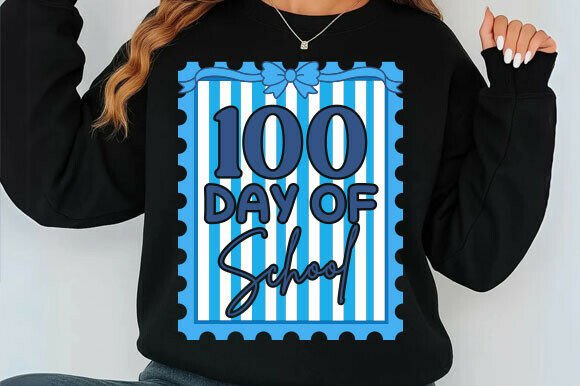
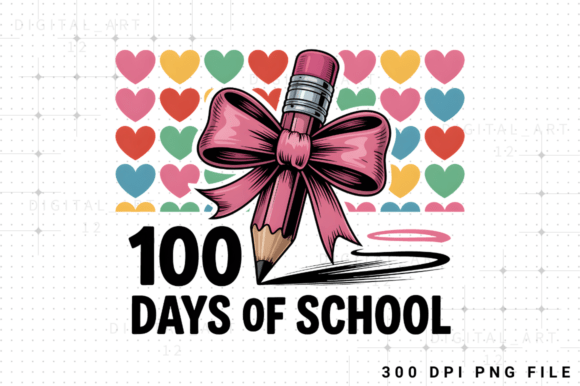
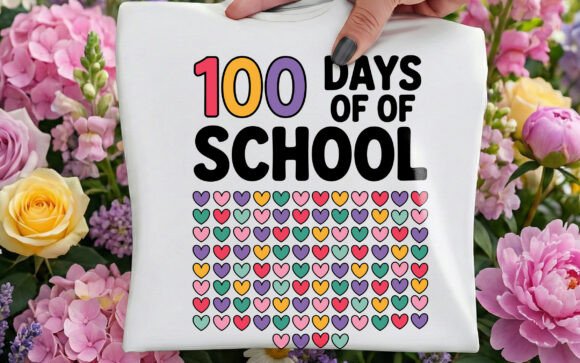
The mood of this design is celebratory but structured. It captures that specific milestone energy of early elementary education without feeling chaotic. The layout appears balanced, which is essential when you are working within the constraints of a hoop size. In embroidery, negative space is just as important as the filled areas. A design that is too dense becomes stiff and uncomfortable, especially on children’s clothing. Looking at the lines and shapes in this graphic, I can already visualize how they would translate into a combination of satin stitch borders and fill stitch centers.
For a custom apparel project, visual clarity is king. Parents want to see the number "100" clearly from across the playground. This design’s bold elements suggest it will hold up well against the texture of cotton blends. However, the finer details need scrutiny. If you are converting this SVG into an embroidery file, you must simplify any tiny decorative elements that might get lost in the fabric grain or cause thread breaks.
Real-World Application: The Sweatshirt Test
To truly test the viability of this asset, I imagined a real-life scenario: a small batch order for a local boutique selling personalized gift items for kindergarteners. The client wanted sweatshirt embroidery on heather grey fleece. This is a common but tricky substrate. Fleece has a nap, and if your stitch count is too low, the fabric shows through. If it is too high, the sweatshirt becomes board-like.
Using the 100 Days of School T-shirt Design PNG as a visual guide, I mapped out a plan. I would use a tear-away stabilizer to support the stretch of the fleece. The design’s transparent background in the PNG format allows for easy mockups, helping the client visualize the final look before a single thread is cut. This is a huge selling point for Etsy sellers and craft business owners. Being able to send a realistic preview builds trust. The high resolution ensures that even when zoomed in for a detailed quote, the edges remain crisp, allowing for accurate color selection.
I also considered this design for a tote bag design. Canvas bags are durable and handle higher stitch densities well. Here, the commercial use permission included in the download becomes vital. You can confidently use this graphic to create finished products for sale without worrying about licensing infringements, provided you adhere to the standard terms of instant download assets. This peace of mind is invaluable for small shop product lines where margin for error is slim.
Navigating Technical Challenges
While the design is strong, it is not without its pitfalls. Embroidery is unforgiving of poor preparation. If you attempt to stitch this on a curved surface, like a cap or hat, you will need to adjust the pull compensation. The straight lines in the "100" might bow if the tension is not perfectly calibrated. Similarly, if you are working with thin fabric, such as a baby onesie for baby embroidery, you must use a cut-away stabilizer to prevent puckering. The weight of the thread can distort lightweight knits if the design is too large or dense.
Another critical consideration is color contrast. The PNG allows you to test different thread colors digitally. I recommend testing the design in black and white first. If the design loses its definition in grayscale, it will likely look muddy when stitched. For dark fabrics, you might need to add an underlay or choose lighter thread colors to ensure the message pops. This is where the vector formats shine; you can easily recolor elements in your design software before sending them to your digitizing program.
Enhancing Product Value and Brand Consistency
Why does this matter for your bottom line? Because consistency builds brands. When you use high-quality design assets like this, your finished product looks professional. Customers can spot a rushed job from a mile away. Clean lines, appropriate stitch density, and thoughtful fabric choices signal quality. This design, when executed correctly, elevates a simple t-shirt into a keepsake. It transforms a commodity into a holiday embroidery staple or a memorable school milestone item.
For commercial embroidery shops, speed is also a factor. Having a pre-made graphic that is ready for commercial use saves hours of design time. You are not starting from scratch; you are refining an existing concept. This efficiency allows you to take on more orders or spend more time on marketing your handmade product listings. Whether you are creating an embroidered patch for a uniform or a decorative accent on a kitchen towel, the foundational work is done.
Practical Notes for the Maker
Before you commit to a full production run, follow these steps. First, always stitch out a test on scrap fabric that matches your final material. Check for thread breaks and registration issues. Second, verify the scale. The 4500×5400 pixel dimensions are large, but ensure the aspect ratio fits your intended hoop. Third, inspect the small details. If there are tiny serifs or intricate corners in the SVG, consider removing them or enlarging them slightly to accommodate the thickness of embroidery thread.
Finally, remember that while the license permits commercial use for finished items, it typically does not allow you to resell the digital file itself. You are selling the labor and materials of the embroidery project, not the graphic. Keep this distinction clear in your shop policies to avoid confusion with buyers.
In conclusion, the 100 Days of School T-shirt Design PNG is a robust tool for the modern maker. It bridges the gap between digital convenience and tactile craftsmanship. By respecting the technical requirements of embroidery and leveraging the flexibility of the provided file formats, you can create stunning, sellable items that resonate with customers. It is not just a graphic; it is a blueprint for quality, waiting for your skilled hands to bring it to life.