Rabbits in School Bus: A Designer’s Review
As an embroidery designer who has spent countless hours digitizing and testing files for client work, I have learned that the charm of a design is only half the battle. The other half is technical viability. Will it stitch out cleanly? Does it hold up after washing? Is it versatile enough for different products? Recently, I evaluated Rabbits in School Bus. Funny Animal Kids, a graphic asset that immediately caught my eye for its playful narrative and potential in the children’s market. This review breaks down how this illustration performs not just as a digital image, but as a practical component in real-world embroidery projects.
First Impressions and Visual Personality
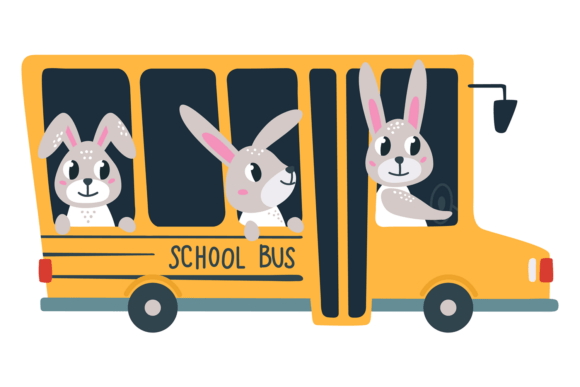
The first thing that strikes you about Rabbits in School Bus. Funny Animal Kids is its inherent storytelling. It is not just a static character; it is a scene. The composition features rabbit characters in a school bus setting, isolated on a white background. For a designer, this isolation is crucial. It means the artwork is clean, with defined edges that are easier to trace or convert into stitch paths compared to complex, cluttered backgrounds.
The mood is undeniably cheerful and whimsical. The "funny animal kids" theme taps directly into the lucrative nursery and early education market. Visually, the lines appear bold and distinct, which is a positive indicator for embroidery. Fine, hairline details often get lost in thread, but this design seems to rely on shape and color block contrast, which translates well to satin stitches and fill stitches. As a piece of Illustrations or Graphics, it stands out for its clarity, suggesting that it was created with scalability in mind.
Real-World Application: The Custom Tote Bag Test
To truly understand the value of Rabbits in School Bus. Funny Animal Kids, I imagined a specific use case: a custom embroidered tote bag for a back-to-school promotion. Tote bags are typically made from canvas or heavy cotton, providing a stable foundation for embroidery. In this scenario, the design would serve as the central focal point.
Because the characters are isolated, placing them on a colored fabric requires careful consideration of thread colors. If I were stitching this on a navy blue tote, I would need to ensure the rabbits and the bus have sufficient contrast. The design’s simplicity allows for creative liberty with thread colors. You could stick to realistic browns and yellows, or go vibrant with purples and greens to appeal to a younger demographic. The result would be a high-value handmade product that feels professional rather than amateurish.
Beyond tote bags, this design is ideal for sweatshirt embroidery. A child’s hoodie with this motif on the chest or back becomes an instant favorite. The playful nature of the rabbits aligns perfectly with baby embroidery projects, such as bibs or blanket borders, provided the scale is adjusted appropriately. For Etsy sellers and small shop product creators, this versatility is key. One design can populate multiple listings, from personalized gifts to holiday embroidery items for Easter or the start of the school year.
Technical Considerations for Embroiderers
While the visual appeal is strong, the transition from a digital embroidery file to a physical stitch-out requires technical diligence. Since the product description lists formats like EPS, JPG, SVG, and transparent PNG, it is important to note that these are primarily graphic formats. If you are using this as a reference for digitizing your own machine embroidery design, you have full control over stitch types. However, if you are purchasing a pre-digitized version, you must check the stitch density.
Dense areas, such as the body of the bus or the fur of the rabbits, can cause puckering if the density is too high for the fabric. For custom apparel made from thinner materials like jersey knit, a lower density fill stitch is essential. Conversely, for an embroidered patch intended for iron-on application, you can afford higher density and heavier stabilizer usage to create a raised, textured look.
Another critical factor is hoop size. The level of detail in the rabbits’ faces and the bus windows dictates the minimum hoop size required. Attempting to shrink this design into a 4x4 inch hoop might result in lost details, where small elements merge into a blob of thread. I recommend testing the design on scrap fabric first, ideally in the actual fabric texture you plan to use. This helps identify any pull compensation issues or thread breaks before committing to a final finished product.
Navigating Challenges: Fabric and Placement
Not every surface is suitable for every design. When working with Rabbits in School Bus. Funny Animal Kids, avoid placing it on highly textured fabrics like thick terry cloth unless you use a cut-away stabilizer and potentially an applique technique. Applique can simplify the design by replacing dense fill stitches with fabric patches, reducing bulk and stitch time. This is particularly useful for caps and hats, where the curved surface and limited space make detailed embroidery challenging.
Dark fabrics present another hurdle. If the design includes light-colored elements, you may need an underlay of white thread to prevent the dark fabric from showing through. This adds to the stitch count and production time. For commercial embroidery runs, efficiency is paramount, so calculating these extra steps is vital for pricing your craft business items correctly.
Additionally, consider the end-user’s care instructions. Items like kitchen towels or aprons undergo frequent washing. Ensure that the thread colors chosen are colorfast and that the stitch structure is secure. A poorly stabilized design can shift or pucker after the first wash, damaging the perceived quality of your brand consistency and customer trust.
Enhancing Brand Value and Customer Engagement
From a business perspective, Rabbits in School Bus. Funny Animal Kids offers more than just aesthetic appeal; it offers emotional connection. Parents and gift-givers are drawn to designs that evoke joy and nostalgia. Using this design in your printable mockup previews can significantly boost engagement on social media and online marketplaces. A well-presented digital embroidery file or finished item tells a story that resonates with buyers.
For creative entrepreneurs, this design can be part of a larger collection. Pair it with other school-themed or animal-themed graphics to create a cohesive line of design assets. This approach helps in building a recognizable brand identity. When customers see consistent quality and theme across your Etsy listings or boutique displays, they are more likely to return and recommend your shop.
Moreover, the versatility of the file formats (SVG, PNG) allows for hybrid products. You might offer the embroidery service for physical goods while selling the digital cut files for crafters who use vinyl or sublimation. This diversification maximizes the ROI of a single design purchase.
Final Verdict and Practical Advice
In conclusion, Rabbits in School Bus. Funny Animal Kids is a strong contender for designers looking to expand their children’s wear and gift offerings. Its clear lines, engaging theme, and isolated composition make it adaptable for various embroidery projects. However, success lies in the execution.
- Test before production: Always stitch out a sample on your intended fabric.
- Check licensing: Confirm whether the license allows for commercial use of finished items or digital redistribution.
- Optimize for fabric: Adjust stabilizer and stitch density based on whether you are working with knit, woven, or textured materials.
- Consider scale: Ensure the design is large enough to retain detail in smaller hoops.
By treating this graphic not just as an image but as a structural element of your product, you can create high-quality, profitable items that stand out in a crowded market. Whether you are a hobbyist making a personalized gift or a seasoned Etsy seller scaling your inventory, this design offers the playful professionalism that modern customers crave.